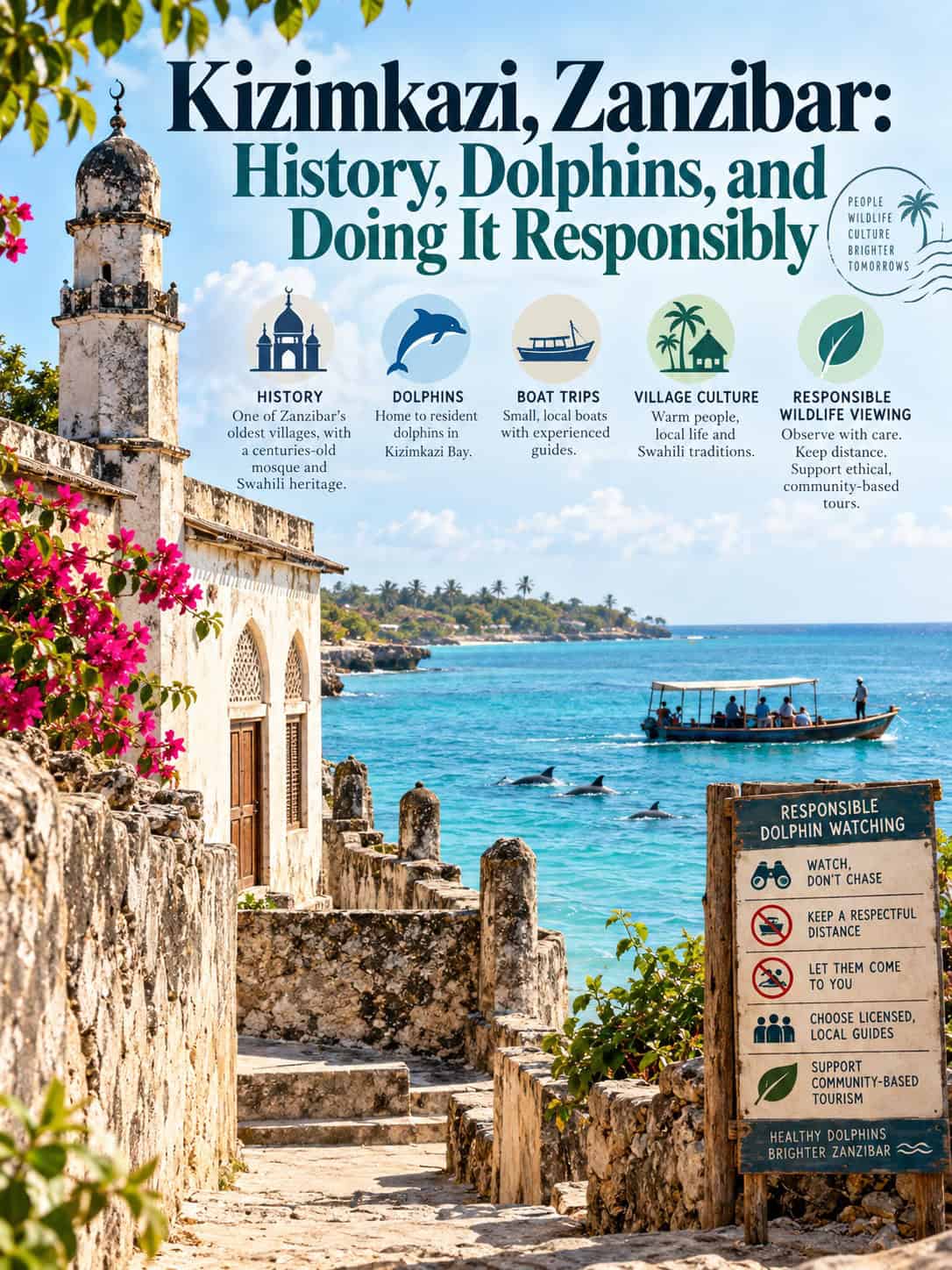
Kizimkazi Zanzibar offers historic sites, quiet coastal scenery and dolphin-watching boat trips. Visit the old mosque in Dimbani and choose a responsible marine operator rather than a tour that promises close contact with dolphins.
Kizimkazi sits on the south coast of Unguja, around 53–60 km from Stone Town by road, depending on the village. Dimbani is known for its historic mosque, while Mkunguni is a common departure area for dolphin tours. These are separate locations. For specific places to stay, where to stay in Stone Town has the full rundown.
Kizimkazi Mosque: History, Entrance Fee and Visiting Rules
Kizimkazi Mosque stands in Dimbani. An Arabic Kufic inscription dates the original foundation to 500 AH (1107 CE), and the current building incorporates later reconstruction. Researchers describe it as one of the oldest surviving mosques in use along the East African coast.
The historic inscription names Abu Imran Muse as the original patron. Researchers date substantial rebuilding to the eighteenth century. Visitors should distinguish the 1107 inscription from the age of every visible wall or architectural feature. Compare it with the later mosques of Stone Town.
The mosque remains a religious and heritage site. Zanzibar’s Ministry of Tourism and Heritage lists admission at US$5 for a foreign adult and US$2 for a foreign child. Local rates are TZS 2,000 and TZS 1,000 respectively. Ask permission before entering, dress modestly and avoid interrupting prayers.
Kizimkazi Mosque: Official Entrance Fees
| Visitor | Government-listed entrance |
|---|---|
| Foreign adult | US$5 |
| Foreign child | US$2 |
| Local adult | TZS 2,000 |
| Local child | TZS 1,000 |
The Zanzibar Ministry of Tourism and Heritage lists these prices. Confirm which areas tourists may enter and whether a guide costs extra. The site remains a mosque: cover shoulders and knees, remove shoes when instructed, and seek permission before photographing.
Kizimkazi Dimbani vs Mkunguni: Which Village?
| Area | Main reason to visit | Booking consideration |
|---|---|---|
| Kizimkazi Dimbani | Historic mosque, village history and some dolphin departures | Ask which beach the boat uses |
| Kizimkazi Mkunguni | Common dolphin-tour departure area and fishing village | Confirm exact meeting point and return transfer |
The two villages are a few kilometres apart. The mosque itself stands about three kilometers northwest of Kizimkazi town. A booking that only says “Kizimkazi” may send you to the wrong place.
Kizimkazi Dolphin Tour: Wildlife and Ethical Concerns
Dolphin-watching tours around southern Zanzibar may encounter Indo-Pacific bottlenose dolphins and endangered Indian Ocean humpback dolphins. Some operators also report spinner dolphins, but sightings vary. No operator can promise a particular species.
Heavy boat traffic can disrupt dolphin feeding, resting and social behaviour. Reports describe boats chasing pods or dropping swimmers in their path. Choose a captain who leaves animals space and stops an encounter when dolphins move away.
Zanzibar’s Department for Fisheries and Marine Resources has issued official dolphin-tourism guidelines. Boats should move slowly at a steady speed, approach a group from the rear or the side rather than head-on, and never chase, encircle or cut through the dolphins. Crews must never approach a mother and calf and should always leave the animals an escape route when more than two boats are present. Swimmers should enter the water quietly without jumping or diving in, stay close to the boat and let the dolphins come to them. Ask operators to explain the current rules before departure.
Kizimkazi Dolphin Tour: How to Choose an Operator
Ask your captain how the crew responds when dolphins move away from the boat. Tail slapping, coughing sounds, leaping or turning away from the boat are signs that the dolphins are disturbed, and a good crew then leaves them alone and looks for other animals. A responsible team avoids chasing, blocking or separating animals, especially mothers and calves. It also explains the rules and does not promise sightings or swimming. Request the safety briefing before the boat leaves.
Avoid operators that guarantee dolphin contact, race toward pods or crowd animals for photos. A private charter is not automatically ethical; the captain’s behaviour matters more than the boat’s passenger count.
Many boats depart around 6:00–8:00 AM, when operators hope to avoid crowds and rougher conditions. Weather, wind and dolphin activity still vary. The long rains usually fall around March–May, but no season guarantees calm water. See how far Stone Town is from each beach for the journey.
Kizimkazi Dolphin Tour Prices: Published Examples
| Operator | Published price | Included / excluded |
|---|---|---|
| Eco & Culture Tours, 2 guests from Stone Town | US$65 per person | Transfer, boat, guide, snorkeling equipment, fees; no lunch |
| Eco & Culture Tours, 4 guests from Stone Town | US$40 per person | Same supplier package; confirm current quote |
| Sky Zanzibar, 2 guests from Stone Town | US$85 per person | Boat, guide, lunch, Menai Bay fee, snorkeling equipment |
| Ethical Dolphin Tours (local provider) | Price varies by group | Adult life jackets; hotel pickup extra; verify route |
These are supplier listings, not guaranteed live prices. Compare total cost by number of guests: Sky Zanzibar’s half-day tour from Stone Town hotels costs US$100 for one traveler, US$85 per person for two, US$75 for three, US$65 for four and US$55 for five, with soft drinks and taxes also included. Some operators include hotel pickup, while others charge extra. Ask whether the crew follows the government’s dolphin-watching guidelines.
Checklist for an Ethical Dolphin Tour
- Will the captain stop if dolphins swim away?
- Does the boat avoid chasing, encircling or cutting across pods?
- Does the crew avoid separating mothers and calves?
- Can guests enjoy the trip without entering the water?
- Does the operator carry suitable life jackets and explain cancellation rules?
Things to Do in Kizimkazi Beyond Dolphin Tours
Kizimkazi combines fishing villages, quiet coastline, small hotels and some secluded resorts. Beyond dolphin watching, visitors can explore the mosque, enjoy a beach walk, book a boat outing or use the area as a base for southern Zanzibar. Accommodation options suit some multi-night stays, especially visitors who prefer quiet evenings.
Things to Do in Kizimkazi: Beaches, History and Nature
| Activity | Why go | Planning tip |
|---|---|---|
| Kizimkazi Mosque | 1107 CE inscription and Swahili Islamic history | Check prayer times and access |
| Kizimkazi Beach | Relaxed fishing-village coast, views over the sea | Check tide, rocks and local swimming conditions |
| Dolphin watching | Wildlife from a small boat | Choose distance-based observation, not chasing |
| Menai Bay boat outing | Snorkeling or sandbank trips depending on operator | Confirm conservation fees and equipment |
| Jozani Chwaka Bay area | Forest and red colobus viewing | Arrange a separate guided stop and entry |
| Southern village visit | Local food, fishing and quieter coastal scenery | Respect working areas and photo permissions |
The Jozani Chwaka Bay National Park makes a natural second stop on the way back to the east coast or Stone Town.
Kizimkazi Beach: Swimming and Accommodation
Kizimkazi’s southern coastline contains smaller beaches and rocky sections rather than one uninterrupted resort beach. Tides, sea urchins and boat activity can limit swimming. Ask your hotel for a suitable entry point.
Small guesthouses and secluded resorts cater to different budgets. Compare the exact beach location, pool, nearby restaurants and transfer costs. The area can suit an overnight stay when you want a quiet base rather than a busy beach town.
Kizimkazi Zanzibar: Who Should Stay Here?
Kizimkazi suits travellers interested in marine wildlife, Islamic heritage and quiet southern beaches. It is less convenient for nightlife and numerous restaurants than Nungwi or Paje. A day trip works well, but a secluded stay can also make sense for couples and slow travellers.
Best Time to Visit Kizimkazi Zanzibar
June to October is generally drier, while January and February often bring another relatively dry period. March to May tends to be wetter. Boat conditions can change in any month. Check the forecast and ask the captain about cancellation terms.
How to Get to Kizimkazi Zanzibar from Stone Town
| Starting point | Planning estimate | Important detail |
|---|---|---|
| Stone Town | About 53–60 km; allow 75–100 minutes by road | Exact route depends on Dimbani or Mkunguni |
| Zanzibar Airport | Allow roughly 50–90 minutes | Traffic and meeting point vary |
| Paje or Jambiani | Allow about 45–75 minutes | Arrange early pickup for morning boats |
| Nungwi or Kendwa | Often around 2–2.5 hours | Consider a full-day plan rather than a short transfer |
These are planning ranges, not guaranteed live travel times. A private taxi or tour transfer works best for an early boat. Confirm the meeting village, return fare and whether the operator collects you from your hotel.
Kizimkazi Zanzibar: A Practical Half-Day Itinerary
06:30–09:00: Join a responsible dolphin-watching boat if sea conditions allow. 09:30: Stop for breakfast and a village walk. 10:30: Visit Kizimkazi Mosque in Dimbani with permission. Afternoon: Return to your hotel or add a Jozani Forest stop. These are illustrative times; arrange travel between the two villages and respect prayer hours.
Kizimkazi Zanzibar: Practical Visitor Checklist
- Vet your operator: Ask what happens if the dolphins swim away — the answer tells you how that company operates.
- Don’t expect a guarantee: Sightings depend on season, tide and luck; any operator promising a certain encounter is a warning sign.
- See the mosque too: Kizimkazi Mosque in nearby Dimbani is a significant historic site and gets a fraction of the visitors the dolphins do.
- Set expectations: Kizimkazi has local fishing communities, quiet beaches and several accommodation options. Check nearby restaurants, road access and the location of your chosen hotel.
Kizimkazi Zanzibar: Bottom Line
Choose Kizimkazi for history, southern coastal scenery and careful dolphin observation. Visit the 1107 mosque site and confirm tour conditions before paying. Both a day trip and a quiet overnight stay can work.
FAQ
Are the Kizimkazi dolphin tours ethical?
Dolphin watching can disturb animals if boats chase or crowd pods. Choose an operator that follows Zanzibar’s official dolphin guidelines and never guarantees contact. Our safety guide covers the practical side of this.
What species of dolphin can you see at Kizimkazi?
Tours commonly seek bottlenose dolphins. Indian Ocean humpback dolphins also inhabit the region, while operators sometimes report other species. No sighting is guaranteed.
How old is Kizimkazi Mosque?
A Kufic inscription records an original foundation in 1107 CE. The building underwent significant reconstruction in the eighteenth century. Zanzibar’s tourism ministry lists a US$5 foreign-adult entrance fee.
What’s the best time of day for a dolphin tour?
Many operators depart between 6:00 and 8:00 AM. Check sea conditions and the tour itinerary; no departure time guarantees dolphins.
Is Kizimkazi a good beach-holiday base?
Yes, for travellers who want a quiet southern base. Kizimkazi has small hotels and secluded resorts, although the beach, dining and nightlife experience differs from Nungwi or Paje.
Where is Kizimkazi Beach Zanzibar?
Kizimkazi lies on Unguja’s south coast. It includes Dimbani, known for the old mosque, and Mkunguni, known for fishing and dolphin tours.
How much does a Kizimkazi dolphin tour cost?
For example, Eco & Culture Tours publishes US$65 per person for two guests departing from Stone Town, including transfers. Ask each operator for its own itemised rate.
What is the Kizimkazi Mosque entrance fee?
Zanzibar’s tourism ministry lists US$5 for foreign adults and US$2 for foreign children. Respect worship arrangements and confirm access.
Can visitors swim at Kizimkazi Beach?
Some beach sections permit swimming in suitable conditions, but rocks, tides and boats vary. Ask your hotel where to enter the water safely.
How far is Kizimkazi from Stone Town?
Allow approximately 53–60 km and 75–100 minutes by road. The specific distance depends on whether you visit Dimbani or Mkunguni.
Can I visit Kizimkazi and Jozani Forest in one day?
Yes. Book an early dolphin trip, visit the mosque and plan a separate guided stop at Jozani. Confirm transport, entry fees and opening hours.
Dolphin trips and other excursions in the south can be compared and booked in advance; check what is included and how the operator treats the animals.
 By Zanzibar With Me EditorialPublished Updated