Is Zanzibar safe? For most travelers, yes. Zanzibar is one of the more relaxed destinations in East Africa, and the problems visitors meet most often are overpriced taxis, pushy touts and sea urchins. That said, risks depend on the area and circumstances, and petty theft and occasional more serious incidents do happen, especially at night and in isolated spots.
Whether you are asking if Zanzibar is safe for tourists, for solo women or for swimming, the real risks are specific and avoidable. Our visa guide covers entry rules, and this guide covers safety on the ground.
Zanzibar Travel Safety at a Glance
| Risk | Where | Practical precaution |
|---|---|---|
| Papasi touts and scams | Ferry dock, beaches, Stone Town | Book hotel and tours in advance; never hand over a deposit to someone who approached you |
| Overpriced taxis | Airport, ferry terminal | Pre-book a transfer or agree the price before getting in |
| Petty theft | Crowded markets, Stone Town | Keep phones and wallets in front pockets; avoid displaying jewelry |
| Night-time street crime | Isolated Stone Town alleys, dark beaches | Use lit, busy streets and arrange transport back in advance |
| Sea urchins and coral cuts | Reef and low-tide walks | Wear reef shoes |
| Tides and currents | East coast (Paje, Jambiani, Bwejuu) | Check tide times locally before swimming |
| Unsafe boats | Informal tours and old ferries | Use registered operators and wear a life jacket |
| Illness | Whole island | Drink bottled water and take malaria precautions |
Zanzibar Safety Tips: Papasi, the Thing You’ll Actually Deal With
“Papasi,” also called beach boys, are unregistered touts who gather at the ferry dock, the beach and tourist hotspots, offering boat rides, shopping trips, hotel recommendations and tours, usually at inflated prices and without a license. They earn commissions from the hotels and services they steer you toward, so they sometimes falsely claim your actual hotel is closed or full. Some take deposits for accommodation, cars or excursions and disappear, and tours booked through them may use boats that are not registered, which is a real safety issue if something goes wrong on the water.
Registered guides, by contrast, are licensed by the Tourism Commission, carry identity cards you can ask to see, and work through reputable tour companies or hotels. The practical fix is simple: book accommodation and excursions in advance, decline street approaches politely but firmly, and never hand money to someone who approached you rather than the other way around.
Zanzibar Scams: Taxis and Transport
Drivers at the airport and ferry terminal sometimes quote two to three times the normal fare to new arrivals. Pre-booking a transfer through your hotel avoids the negotiation entirely, and agreeing on a price before you get in is the single best habit to carry through the whole trip. For typical fares by area, see our airport transfer guide, and for getting around the island, getting around Zanzibar.
Is Stone Town Safe? Petty Theft and Street Safety
Pickpocketing and opportunistic theft happen, mostly in crowded places such as markets, beaches, transport hubs and hotels, so keep phones and wallets in front pockets or a money belt. Bag-snatching by motorbike riders is more of a mainland risk, concentrated in Dar es Salaam, but it is worth knowing if you spend time there before or after the island.
Stone Town is busy and generally comfortable during the day. Incidents have also been reported at hotels and on popular beaches around the island, so the same care applies outside Stone Town. After dark, stick to lit, populated streets, because isolated alleys late at night are where the occasional mugging has been reported, and arrange your ride back in advance. Violent incidents involving tourists at bars are uncommon but not unheard of, so watch your drink. Our Stone Town guide covers the area in more detail.
Burglary is a risk at hotels and guesthouses too. Keep doors and windows locked, especially at night, and if your accommodation has security staff, ask anyone you do not know for identification before letting them into your room.
Is Zanzibar Safe for Solo Female Travelers and Women?
Zanzibar is a largely Muslim island, and dressing modestly, with shoulders and knees covered outside resort areas, matters more for how smoothly your trip goes than most other safety factors. Women traveling alone do draw more attention and unsolicited approaches than men, but solo female travelers generally report positive experiences when they dress accordingly, avoid walking alone at night and decline persistent attention firmly rather than engaging. Public displays of affection are culturally discouraged island-wide. Away from tourist resorts, the Zanzibari authorities can fine visitors $700 or more for clothing such as shorts or sleeveless tops, so modest dress is a legal matter as well as a courtesy. Our dress code guide covers the details.
LGBTQ+ travelers should know that homosexuality is illegal in Tanzania and carries severe penalties, so discretion in public, including presenting as friends rather than a couple, is a real safety necessity. Holding hands or kissing in public can lead to arrest.
Is It Safe to Swim in Zanzibar? Ocean and Boat Safety
The two coasts behave differently. On the east coast (Paje, Jambiani, Bwejuu), large tidal swings expose seagrass beds and tidal pools, so swimming works well only at certain points in the tide cycle, and you should check locally rather than assume the water in front of your hotel is swimmable at any hour. The north coast (Nungwi, Kendwa) has far less tidal variation and more consistently swimmable depth throughout the day.
Sea urchins are the most common marine hazard across the island, so reef shoes are worth packing, particularly for low-tide walks. Coral cuts heal slowly and infect easily. Fringing reefs break up large waves, but rip currents can still occur, and if you are caught in one, swim parallel to the shore rather than against it. Beaches are generally unsupervised, and several drownings happen in Tanzania each year, so avoid swimming alone, after drinking or in rough conditions. On any boat excursion, whether a dhow cruise, snorkeling trip or sunset sail, check that the operator is registered, ask for a life jacket and actually wear it.
Zanzibar Travel Safety: Ferries
If your trip includes the Dar es Salaam to Zanzibar ferry, the operator matters: older, cheaper vessels have a poor safety record, including past capsizings, and modern operators such as Azam Marine are generally recommended. If a ferry looks overloaded or unseaworthy, do not board it, avoid crossings in bad weather, and once on board, note where the life jackets and emergency exits are. See our ferry versus flight guide to compare the options.
Zanzibar Travel Advisory and Insurance
Governments publish travel advisories for Tanzania that include Zanzibar. For example, the US government advises exercising increased caution: it rates Tanzania Level 2 of four. Canada asks travelers to exercise a high degree of caution in Tanzania and names Stone Town, Nungwi, Paje and Jambiani as places for extra care. The UK notes that past elections in Zanzibar turned violent and that the authorities have limited internet access during protests, so stay away from demonstrations and large crowds. Read your own government’s current advisory before you travel, because advisories change, and treat it as one input alongside the practical advice in this guide rather than a replacement for it.
Non-resident foreign visitors are required to buy a compulsory inbound insurance policy, which costs $44 per adult and $22 per child and is valid for up to 92 days. You buy it from the Zanzibar Insurance Corporation if you land in Zanzibar first, or from the National Insurance Corporation if you enter through the mainland, and you can be refused entry without it. Its coverage is limited and it will not cover cancellation, lost luggage or higher medical costs, so a proper travel insurance policy on top of it is worth having.
Health and Emergency Numbers
Tap water is not safe to drink or brush your teeth with, so stick to bottled or filtered water. Zanzibar sits in a malaria zone at sea level, so take malaria precautions and speak to a doctor about prophylaxis before you travel.
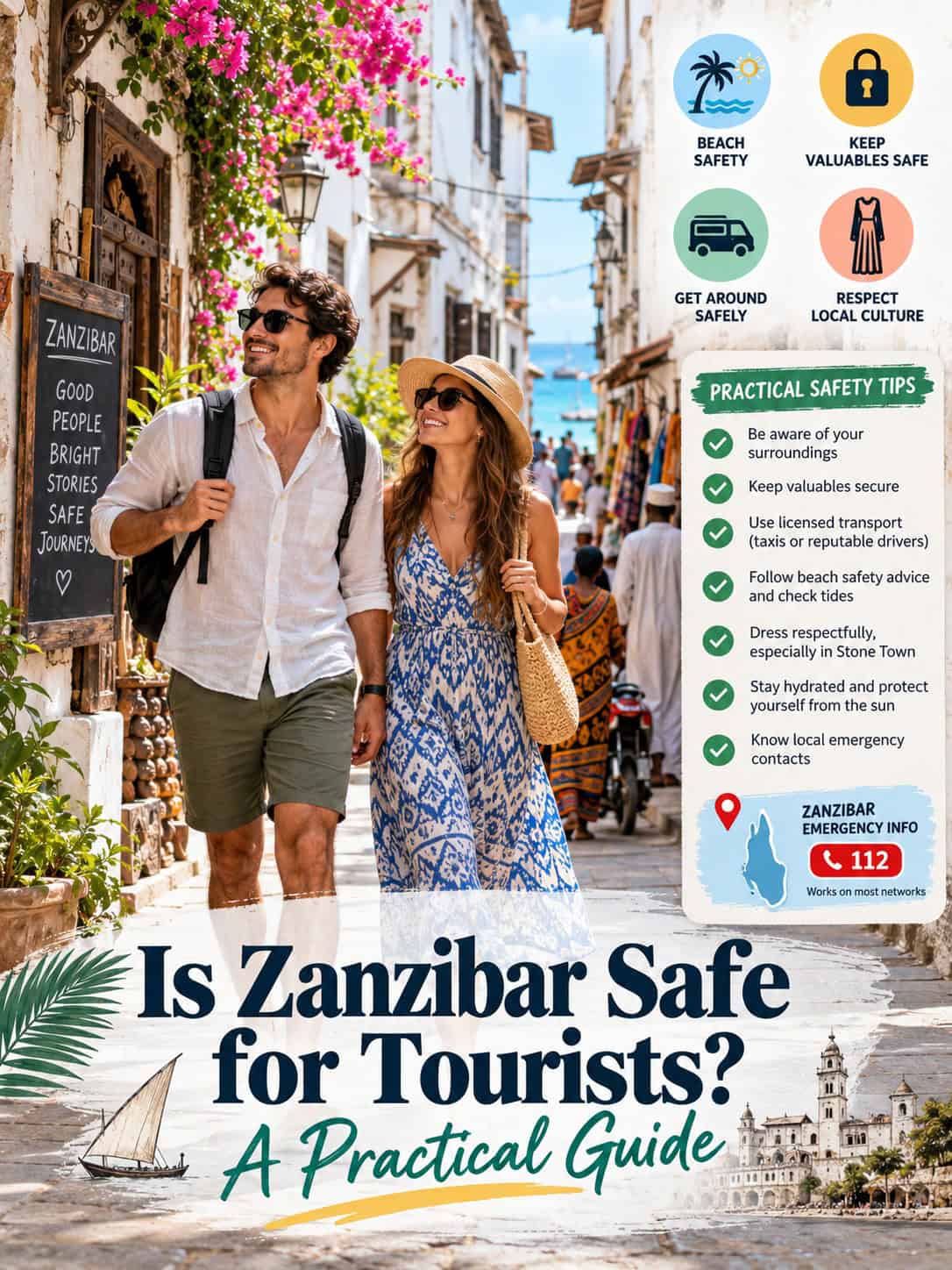
Tanzania’s emergency numbers are listed as 112 for police, 114 for fire and 115 for ambulance, but they may not work reliably everywhere, so save local numbers too. Embassy help lists give Mnazi Mmoja Hospital in Stone Town an ambulance line of 0773 204740 and Ampola Tasakhtaa Global Hospital an emergency number of +255 24 223 2222. Ask your hotel to confirm the numbers when you arrive. Serious cases are often evacuated to Dar es Salaam or Nairobi, which is another reason to carry full insurance.
Is Zanzibar Safe: Frequently Asked Questions
Is Zanzibar safe for tourists overall?
Mostly yes. Most visitors have trouble-free trips, and the common problems are overpriced taxis, pushy unlicensed touts (papasi) and marine hazards like sea urchins. Petty theft and, less often, more serious crime can happen, so risk depends on where you are and what you do. Stone Town is lively by day; use lit, busy streets after dark.
What is a “papasi” in Zanzibar?
An unregistered tout who offers tours, transport or accommodation help at docks and beaches, working on commission and sometimes misleading tourists about hotel availability. Book through your hotel or a licensed operator instead.
Is Zanzibar safe for solo female travelers and women?
Generally yes, with sensible precautions: modest dress outside resorts, avoiding walking alone at night and declining unwanted attention firmly. Women alone attract more unsolicited approaches than men, and many solo female travelers still report positive experiences.
Is it safe to swim in Zanzibar?
Yes, with awareness of local conditions. The east coast has large tidal swings that limit swimmable hours, while the north coast stays swimmable most of the day. Wear reef shoes for sea urchins and ask for a life jacket on boat trips.
Is Stone Town safe?
During the day, yes. After dark, stay on lit, populated streets and arrange transport back to your accommodation in advance, because the occasional mugging has been reported in isolated alleys.
Is there a Zanzibar travel advisory?
Governments publish advisories for Tanzania, including Zanzibar. For example, the US government advises exercising increased caution. Check your own government’s current advisory before you travel and treat it as one input alongside the practical advice here.
Do I need travel insurance for Zanzibar?
Non-resident foreign visitors are required to buy a compulsory inbound policy costing $44 per adult ($22 per child), which has limited coverage. A full travel insurance policy on top of it is worth having for cancellation, luggage and higher medical costs.
What should I avoid in Zanzibar?
Unlicensed taxis and tour touts (negotiate or pre-book instead), tap water, walking alone in isolated areas after dark, and older budget ferries for the Dar es Salaam crossing.
For a smoother arrival, airport transfers can be booked in advance, and an Africa regional eSIM keeps you connected for maps and emergency contacts; verify coverage before purchase.
 By Zanzibar With Me EditorialPublished Updated