Zanzibar food combines Swahili, Arab and Indian culinary influences. Try urojo, pilau, biryani, grilled seafood and Zanzibar pizza. Stone Town offers busy local cafés, restaurants and the evening Forodhani market.
Zanzibar cuisine uses cloves, cardamom, cinnamon, coconut and rice in many popular dishes. Its food traditions reflect centuries of Indian Ocean trade. Stone Town is a practical starting point for exploring traditional food in Zanzibar.
Zanzibar is known as the Spice Island, but its dishes vary well beyond spiced rice and coconut curries. This guide covers what to eat in Zanzibar, where to find local dishes, how food prices differ and how to choose a cooking class.
Zanzibar Street Food: Forodhani Gardens Night Market
Forodhani Gardens hosts an evening food market on the Stone Town waterfront (see our Forodhani Gardens guide). Vendors generally set up around sunset, often near 6 pm. Closing times and menus vary. Walk around first, compare prices and choose food cooked thoroughly in front of you.
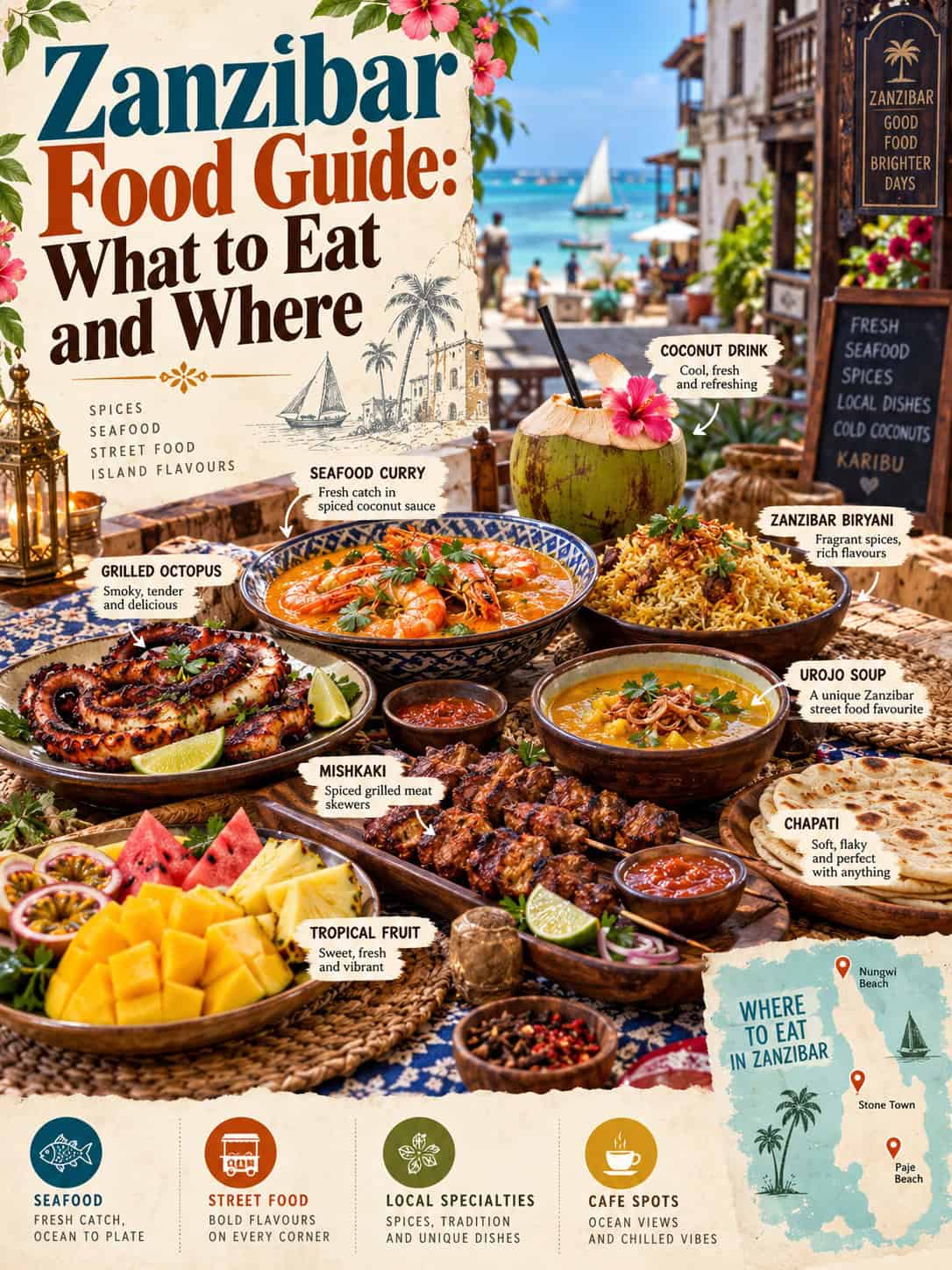
Zanzibar pizza is a folded, griddled dough parcel filled with combinations such as minced meat, egg, onion or cheese. Sweet varieties may contain banana and chocolate. Recent guides suggest roughly TZS 3,000–5,000 for basic versions, but toppings and vendor prices vary.
Urojo Zanzibar, also called Zanzibar Mix, is a tangy, spiced soup commonly served with potato fritters, cassava and crunchy toppings. Some versions include boiled egg or meat. Ask what is included, especially if you avoid animal products or have food allergies.
Mishkaki are marinated meat skewers cooked over charcoal. Beef and chicken versions are common. Recent guides quote around TZS 2,000–4,000 per skewer, depending on size and vendor. Confirm the price per skewer and ask for freshly cooked meat.
Samosas are crisp fried pastry parcels with savoury fillings. Chips mayai combines fried potatoes and eggs in an omelette. Both are familiar Tanzanian snacks, but ingredients and current prices vary by stall.
Choose seafood prepared and thoroughly cooked to order. Avoid food left at unsafe temperatures, especially seafood and sauces containing egg or dairy. Check the total price before the vendor starts cooking.
Zanzibar Cuisine: Coconut Curry, Seafood and Restaurant Dishes
For seafood and Zanzibar coconut curry, compare local cafés, beach restaurants and higher-end venues. Prices depend on the setting, portion, catch and season. Restaurant descriptions below are examples rather than guaranteed menu availability.
Pweza wa nazi is octopus cooked in a coconut-based sauce, often seasoned with garlic, ginger and local spices. It is worth looking for at seafood restaurants in Nungwi, Jambiani and Stone Town. Ask about the day’s availability and price rather than relying on a fixed island-wide rate.
Samaki wa kupaka is grilled fish finished with a seasoned coconut sauce. The exact preparation and fish depend on the restaurant. Do not assume that every seafood restaurant has it on the daily menu. The Rock in Michamvi Pingwe currently lists Seed-Crusted Fish Fillet at US$34, but its published description does not identify that dish as samaki wa kupaka.
Traditional Food in Zanzibar: Biryani, Pilau and Coconut Rice
Traditional Zanzibar meals include fragrant rice dishes, stews, vegetables and coconut-based sides. Availability varies by restaurant and day. These are useful choices when looking for Zanzibar local food outside resort menus.
Zanzibar biryani combines spiced rice with a richly seasoned meat or vegetable preparation. Recipes and layering methods vary. Lukmaan Restaurant in Stone Town serves local meals, including rice dishes, but its current prices and daily selection should be checked on arrival.
Zanzibar pilau is rice cooked with aromatic spices such as cloves, cardamom, cinnamon and black pepper. Meat or vegetable versions are possible. It is often served with kachumbari, a fresh tomato-and-onion relish. Ask which version is available and check the portion price.
Wali wa nazi is rice cooked with coconut milk. It accompanies many curries and fish dishes. Check whether the price includes the curry or only the rice.
Kisamvu is made from cassava leaves cooked until tender, often with coconut milk and seasonings. It can be vegan, but ask whether the kitchen adds fish, meat stock or other animal ingredients.
Lukmaan Restaurant in Stone Town serves cafeteria-style local food, including pilau, curries, chapati and fresh juices. The selection changes. Order from the dishes on display and confirm the total in Tanzanian shillings; a fixed US$3–5 buffet rate is not guaranteed.
Where to Eat in Zanzibar: Choosing by Area
| Area | Best for | What to check |
|---|---|---|
| Stone Town | Traditional meals, markets, rooftop dining | Opening times and prices in TZS |
| Forodhani Gardens | Evening Zanzibar street food | Price per skewer, plate or seafood portion |
| Nungwi and Kendwa | Beachside seafood and tourist restaurants | Menus and added service charges |
| Paje and Jambiani | Beach cafés and coconut-based dishes | Meal availability and transport at night |
| Michamvi Pingwe | Special-occasion dining at The Rock | Reservation deposit and transport |
Best Restaurants in Zanzibar: Specific Options
Lukmaan Restaurant, Stone Town: cafeteria-style local dishes such as pilau, curries and chapati. The selection changes daily.
The Rock, Michamvi Pingwe: a destination restaurant with published menu prices. Its official menu lists Seed-Crusted Fish Fillet at US$34 and The Rock Special seafood platter at US$86. Published prices include 15% VAT. Reservations require a US$10 non-refundable deposit per person, credited against the food bill.
Forodhani Gardens, Stone Town: a food market rather than one restaurant. Compare individual stalls for urojo, skewers and Zanzibar pizza.
These examples serve different budgets and dining styles. Confirm opening times, menus and reservations directly before travelling.
Zanzibar Cooking Class: Learn Swahili Recipes
Mamas of Zanzibar by Maskat offers a hands-on cooking experience in Bububu, near Stone Town. Its published Zanzibar Experience costs US$100 per adult, begins at 9 am and is scheduled to finish at about 1:30 pm, after lunch. The operator lists a market visit, cooking, lunch, drinks and recipes as inclusions. Zanzibari coffee with snacks and a gift bag with a khanga are part of the package too. Children up to age 11 pay US$32, children aged 4 and under join free, and the class does not run during Ramadan. Confirm the exact menu before booking.
The operator asks guests to pre-book and recommends booking at least 14 days ahead for preferred dates. Visa and Mastercard are accepted on site. Since the session takes the morning, check travel time before combining it with an afternoon spice tour. Food tours and cooking classes can also be browsed and booked in advance.
Zanzibar Food Prices: Practical Cost Comparison
| Dish | Where | Price |
|---|---|---|
| Zanzibar pizza | Forodhani Gardens | Around TZS 3,000–5,000 in recent guides; confirm vendor price |
| Urojo | Street stalls, Forodhani | Varies by stall; ask before ordering |
| Mishkaki (per skewer) | Forodhani, street vendors | Around TZS 2,000–4,000 in recent guides |
| Samosas and chips mayai | Darajani Market, Forodhani | Varies by stall |
| Octopus in coconut curry | Nungwi, Jambiani, Stone Town | Ask the restaurant; depends on catch and portion |
| Grilled fish | Restaurant-specific | The Rock Seed-Crusted Fish Fillet: US$34 on official menu; other restaurants vary |
| Biryani and pilau | Lukmaan and similar local spots | Variable by dishes selected; confirm on site |
| Local meal | Lukmaan | Variable by dishes selected; confirm on site |
These are approximate planning ranges from independent travel guides, not fixed tariffs. Expect local food to cost less than premium waterfront dining. Compare actual menus, serving sizes and any added charges. For more on daily costs and cash, see our Zanzibar money guide.
Is Food Expensive in Zanzibar?
Zanzibar food prices depend strongly on where you eat. Recent independent guides describe local lunches around US$3–6, while beach restaurants may charge around US$10–20 per person. Premium restaurants can cost considerably more. Treat these as indicative ranges, not guaranteed prices.
FAQ
What is the best food in Zanzibar for a first-time visitor?
Start with urojo, Zanzibar pizza, mishkaki or pilau. Forodhani Gardens offers several street-food options in one evening. Compare dishes and ask about ingredients before ordering.
Is Zanzibar pizza actually pizza?
No. It is a stuffed, folded, pan-fried dough snack, closer to a savory stuffed pancake than anything Italian. The name is purely local branding.
Is street food in Zanzibar safe to eat?
Street food has food-safety risks like any other meal. Prefer items cooked thoroughly and served hot. Avoid seafood left unrefrigerated and wash or sanitize your hands before eating.
What time does Forodhani Gardens night market open?
Vendors normally set up around sunset, often near 6 pm. Individual opening and closing times can change with weather and local conditions.
Where can I try a real Swahili home-cooked meal, not a tourist version?
Lukmaan Restaurant is a practical place to try local rice dishes and curries. Mamas of Zanzibar offers a pre-booked cooking experience in Bububu. They provide different experiences, so choose according to whether you want a meal or a class.
Why does so much Zanzibar food use cloves and cinnamon?
Zanzibar developed a major clove trade during the nineteenth century. Cloves, cinnamon and cardamom remain important flavourings in many island dishes, although recipes also rely on coconut, rice, seafood and fresh vegetables.
What is the difference between Zanzibar biryani and pilau?
Pilau cooks rice with spices and often broth. Biryani typically combines aromatic rice with a separately prepared, richly spiced component. Recipes vary between cooks.
What is urojo Zanzibar?
Urojo, also called Zanzibar Mix, is a tangy soup served with fritters, potatoes, crunchy toppings and optional egg or meat. Ingredients vary by stall.
Where to eat in Stone Town on a budget?
Look for cafeteria-style local restaurants such as Lukmaan, or compare prices at Forodhani Gardens in the evening. Confirm each dish price in Tanzanian shillings.
Are vegetarian Zanzibar food options available?
Yes. Coconut rice, vegetable curries and some chapati or bean dishes can be suitable. Check whether sauces contain meat stock, fish, egg or dairy.
Where can I book a Zanzibar cooking class?
Mamas of Zanzibar by Maskat offers a pre-booked cooking session in Bububu. The published adult price is US$100, with a 9 am start. Confirm availability and included activities directly.
 By Zanzibar With Me EditorialPublished Updated